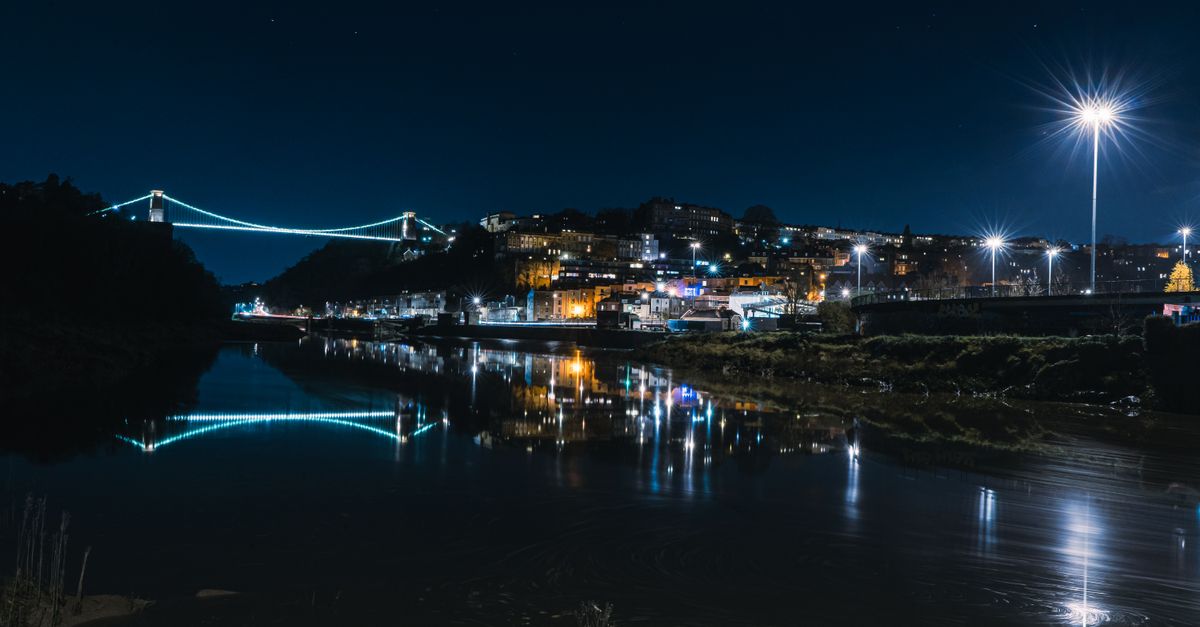
Hotwells is the small, steep neighbourhood between Clifton and the Floating Harbour, where Bristol's terraces turn candy-coloured on the hillside and the water finally meets the tide. It's free to walk around, it's where the Clifton Suspension Bridge crowd rarely bothers to go, and it holds one of the city's best free museums, Underfall Yard, right on the water.
Where Hotwells actually is
Hotwells sits at the bottom of the hill below Clifton, wedged between the Avon Gorge and the western end of the Floating Harbour. It takes its name from a natural hot spring that made it a fashionable Georgian spa suburb in the 1700s, on a smaller scale than Bath's. The spring and its pump room are long gone, but the name stuck to the neighbourhood that grew up around it.
Walk down from Clifton Village or along the harbourside path from the SS Great Britain and Wapping Wharf, and you'll reach Hotwells inside 15 to 20 minutes on foot. There's no need for a car: it's flat along the water and only steep if you climb back up toward Clifton.
The colourful houses
Hotwells' Georgian and Victorian terraces climb the hillside in tiers, painted in the same rainbow of colours that made Totterdown famous on the other side of the city. Hotwells Road, Dowry Square and the streets running up toward Clifton Wood give you the classic photo: stacked, brightly painted houses with the harbour and gorge below. It's quieter than the main tourist spots, so you can take the photo without a crowd.
Underfall Yard
The centrepiece of a Hotwells visit is Underfall Yard, a working Victorian boatyard and free museum on Cumberland Road. It's where the hydraulic system that controls the water level in Bristol's Floating Harbour was built and is still maintained, and the visitor centre explains how the whole harbour actually works, with the original pumping machinery still in place.
- Address: Cumberland Road, Bristol, BS1 6XG
- Opening hours: Monday to Friday, 9am to 4:30pm; Saturday and Sunday, 9am to 5pm
- Admission: Free to the visitor centre and yard
There's a small cafe on site with harbour views, and it's a genuinely good stop for boat-builders, engineers or anyone who wants to understand the Floating Harbour before looking at it from a bar terrace elsewhere.
The Cumberland Basin and the locks
Just along from Underfall Yard, the Cumberland Basin is where the still, level water of the Floating Harbour meets the tidal River Avon through a set of locks and a swing bridge. This is the mechanism that lets Bristol keep a harbour full of water at low tide, something the city needed after ships kept getting stranded in mud in the 18th century. It's also where the road system does something strange overhead: a tangle of flyovers and slip roads built in the 1960s that locals still argue about, since it cuts Hotwells off from the water more than it needs to.
Stand by the locks when a boat is passing through and you can watch the gates work. It only takes a few minutes and there's no charge to watch.
Eating and drinking in Hotwells
Hotwells is small, so don't expect the density of Wapping Wharf or King Street, but there are a couple of proper locals' spots. The Nova Scotia, a harbourside pub on Baltic Wharf, has been serving this stretch of water for generations and gets a good crowd of sailors, dog walkers and locals rather than tourists. For anything wider, the Harbourside and Wapping Wharf's food quarter are a short walk east.
How to get there
| From | Route | Time |
|---|---|---|
| Bristol city centre | Walk along the harbourside path | 20-25 min |
| Clifton Village | Walk downhill via Hotwells Road | 10-15 min |
| Temple Meads | Bus or taxi via the centre | 15-20 min by bus |
There's limited on-street parking and it fills quickly, so walking or the bus is the easier option. If you're driving into Bristol at all, check the Bristol parking guide first, since the Clean Air Zone charge applies to older cars anywhere in the centre, Hotwells included.
Hotwells pairs naturally with a visit to the Harbourside and Old City, and it's an easy add-on to a walk that also takes in the Clifton Suspension Bridge above it.
FAQs
Is Hotwells worth visiting in Bristol? Yes, especially if you want to see Bristol's colourful hillside houses without the crowds, and Underfall Yard is one of the city's best free attractions.
Why is it called Hotwells? It's named after a natural hot spring that made the area a small Georgian spa resort in the 1700s. The spring is no longer accessible.
Is Underfall Yard free? Yes, the visitor centre and yard are free to enter, though donations are welcome.
How do I get from Hotwells to Clifton? Walk uphill from Hotwells Road; it takes 10 to 15 minutes and is genuinely steep in places.
Can you park in Hotwells? There's limited on-street parking, and Bristol's Clean Air Zone charge applies to non-compliant vehicles. Walking or the bus from the centre is easier.
Is Hotwells the same as the Harbourside? No. The Harbourside is the busier stretch around Millennium Square and the SS Great Britain; Hotwells is the quieter neighbourhood just west of it, past the Cumberland Basin.